

Blogs
SMD Screens vs Traditional LED Screens: What You Need to Know

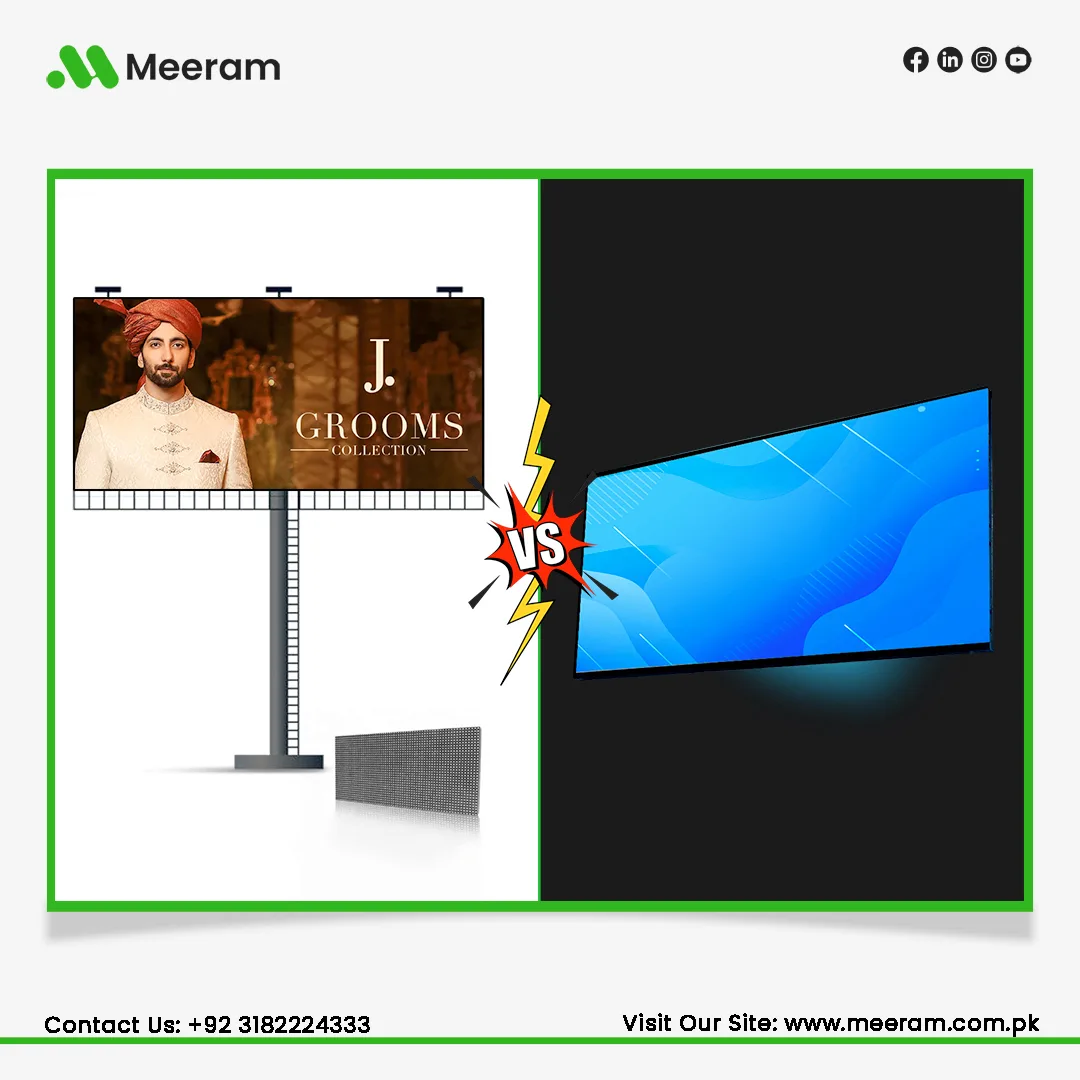
SMD Screens are sort of leading the display industry. Now, you can see them everywhere. This amazing technology is making visual experiences & branding better than before. You might have seen an SMD display anywhere in the shopping mall or stadium and felt like “Wow, that looks so clear”. No one-sided favor, it can be a traditional display with some amazing features too. Both are popular. Both light up our world. But they are not the same. Why & how? Keep reading.
First Things First: What Are These Screens?
Traditional LED screens use tiny lights called LEDs (Light Emitting Diodes). Each LED is a separate little bulb. They are placed close together to form images, text, and videos.
SMD Screens on the other hand, use something called Surface-Mounted Diodes. Instead of single bulbs sticking out, the LED chips are packed together inside a small block. And these blocks are mounted directly onto the board. This makes them smaller, thinner, and neater. SMD screens come in various pixel pitches. These pixel pitch measurements decide the environment, where an SMD display can be installed. For example, SMD with pixel pitch 2.5 would be a perfect option for an indoor environment, while P10 SMD (pixel pitch 10) will suit best in an outdoor location.
Simply put:
- Traditional LEDs = old-school Christmas lights, each bulb standing on its own.
- SMD LEDs = Tiny bulbs neatly tucked and blended together.
Where to Buy SMD Screens in Pakistan?
Before getting into the major differences between SMD and traditional displays, have a look at where you can get an SMD screen in Pakistan. Here comes the name of trust, Meeram Store. We have displays for both indoor & outdoor spaces. More, specifically SMD screens. Hold on, are you worried about the price and quality now? No worries, Meeram Store has got you. We offer only premium quality, and our pricing range is also compatible. Moreover, we offer occasional discounts and a solid warranty on our products.
Traditional LED vs SMD Screens: Step-by-Step Comparison
- Picture QualityTraditional LED: Provides clear visuals, but the image may not look very sharp when viewed from a close distance. These displays are best viewed from far away.SMD Screens: Delivers much sharper and smoother images. Because the pixels are smaller and placed closer together, the picture looks clean and detailed even when viewed up close.
- BrightnessTraditional LED: Extremely bright, making it ideal for outdoor environments such as billboards, stadiums, and roadside advertising.SMD Screens: Bright as well, but slightly softer than traditional LEDs. This level of brightness is perfect for indoor spaces like conference rooms, retail stores, and event halls.
- Size & DesignTraditional LED: Generally bulky, thicker, and heavier in design.
SMD: Slim, modern, and lightweight. These screens can be customized into creative shapes such as curved or cylindrical designs. - Viewing AngleTraditional LED: Image quality may fade slightly when viewed from the side.SMD: Offers a wide viewing angle, ensuring consistent image quality whether viewed from the front or the sides.
- DurabilityTraditional LED: Extremely strong and weather-resistant, making it suitable for outdoor use in rain, heat, and dusty environments.SMD: Durable as well, but best suited for indoor environments where conditions are controlled.
- CostTraditional LED: Usually more cost-effective for large outdoor installations, especially where ultra-high resolution is not required.SMD: Generally more expensive due to higher resolution, advanced technology, and superior visual performance, but offers better value for indoor and close-viewing applications.
Traditional LED: Usually cheaper. Good choice if you want a very large outdoor screen without breaking the bank.
SMD: More expensive, but worth it if you need high-quality visuals and modern looks.
Where Do We Use Them?
Traditional LED screens → Outdoor billboards, stadium scoreboards, road signs.
SMD screens → shopping malls, retail stores, conference rooms, airports, TV studios, and even home theaters. So, the choice depends on where you want the screen and what you need it for.
Which One Should You Pick?
Here’s a simple way to decide:
Need a giant, outdoor, super-bright screen? → Go for Traditional LED.
Want a sleek, sharp, and modern display indoors? → Choose SMD.
The Future of Screens
Technology is moving fast. Every year, SMD screens are becoming brighter, tougher, and cheaper. More and more businesses are choosing SMD because of the crystal-clear quality and stylish designs. But traditional LED screens still hold their ground. They are strong, reliable, and excellent for outdoor use.
So, both will stay. It just depends on your purpose.
Conclusion
Screens are everywhere today. From malls to highways, from offices to stadiums. They grab our attention, share information, and even entertain us. Now you know the difference between SMD and traditional LED screens. Next time you see a big display, you’ll be able to guess which one it is!
In short:
Traditional LED = bright, strong, best for outdoors.
SMD = sharp, sleek, best for indoors.
Both are amazing in their own way. It’s all about choosing the right tool for the right job. If you’re still confused, call Meeram Store’s team for more consultancy!
Frequently Asked Questions
- What is the Main Technical Difference Between SMD and Traditional LED Screens?
Traditional LED screens use separate red, green, and blue LEDs to form a single pixel. In contrast, SMD (Surface-Mounted Device) technology integrates all three colors into one compact chip, resulting in smoother images and better color blending. - Which Technology Offers Better Picture Quality for Indoor Use?
SMD screens are better suited for indoor environments. Their compact design enables higher resolution and more accurate color mixing, ensuring sharp and detailed images even when viewed from just a few feet away. - Are Traditional LED Screens Better for Outdoor Billboards?
Yes, traditional LED screens are ideal for large outdoor billboards. They deliver extremely high brightness and are built to withstand harsh weather conditions, including heavy rain, dust, and direct sunlight. - How Do the Viewing Angles Compare Between the Two?
SMD screens offer much wider viewing angles, allowing images to remain clear and vibrant even when viewed from the side. Traditional LED screens, on the other hand, may experience color and brightness loss at off-center angles. - Which One is More Energy-Efficient and Cost-Effective?
SMD screens generally consume less power and are more cost-efficient for high-resolution applications. However, traditional LED screens can be more economical for very large, low-resolution outdoor installations where extreme brightness is required.